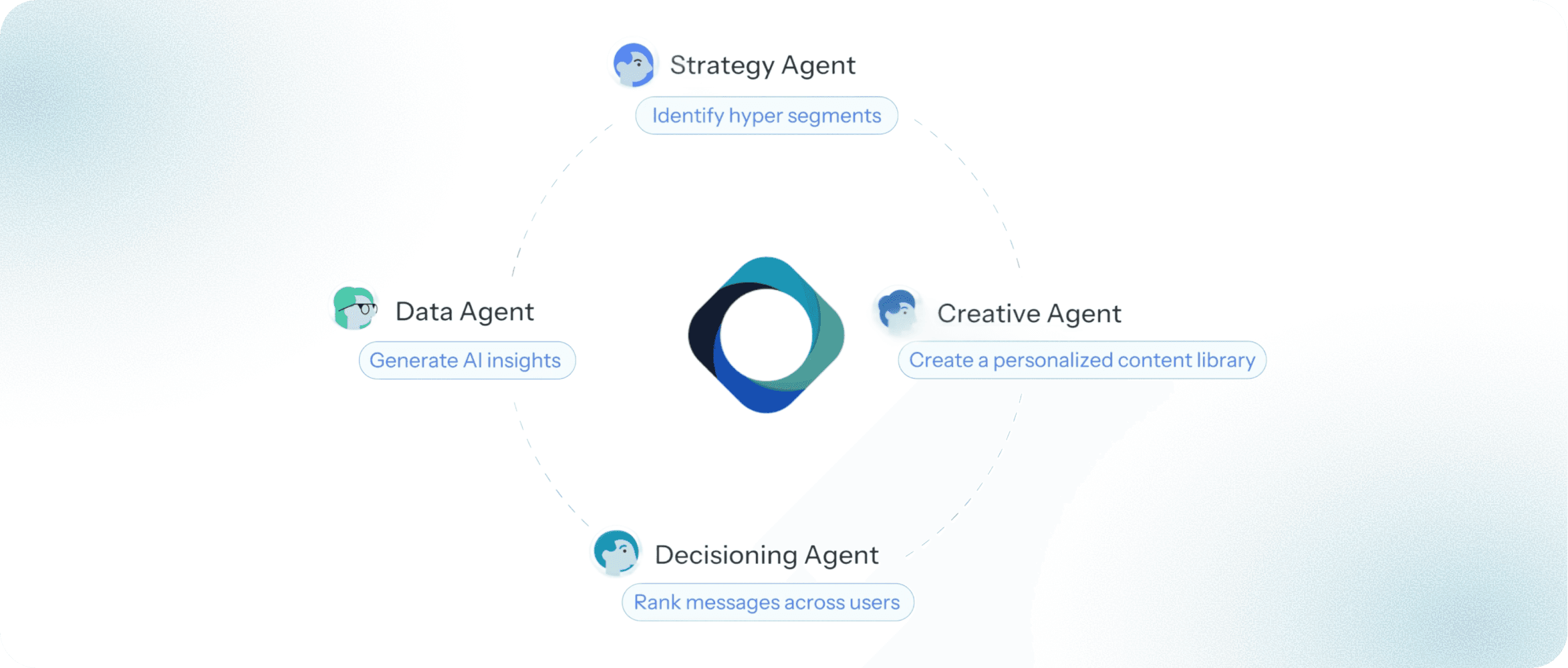




If you think insurance can’t move at AI speed, meet Lemonade. The future of insurance marketing is AI first personalization, not louder discounts. This is how Lemonade used AI-decisioning to learn fast, cut regret from underperforming variants, and prove that friendly + speed beats “cheap + easy” for conversion.
The mandate: conversions, not applause
Lemonade’s goal wasn’t vanity metrics, it was more qualified renters-insurance requests. We used engagement (OR/CTR) for early signal, but success was defined by conversion and sessions tied to quote intent.
We scaled quickly across new-lead and cross-sell campaigns - multiple content variations, carefully personalized across millions of users. Engagement wins came fast (double-digit CTOR lifts). Conversion didn’t automatically follow, and that friction became the work.
The messy middle: where AI earned its keep
What tripped us up:
- Regret from “clever” lines. Some brand-nice variants popped on OR/CTR but lagged on conversion. We kept a few alive too long, spending traffic we should’ve reallocated.
- Price-first framing didn’t work. “From $5/mo” nudged opens, but often failed to move purchase intent; a few tests even lost conversion despite stronger OR.
- Convenience clichés underdelivered. “No hassle/instant” sounded smooth -average opens, soft conversions.
- Measurement gray zone. “Almost significant” p-values tempted quick calls. Reinforcement Learning needed clear separation to commit; we had to let windows mature.
How we corrected course:
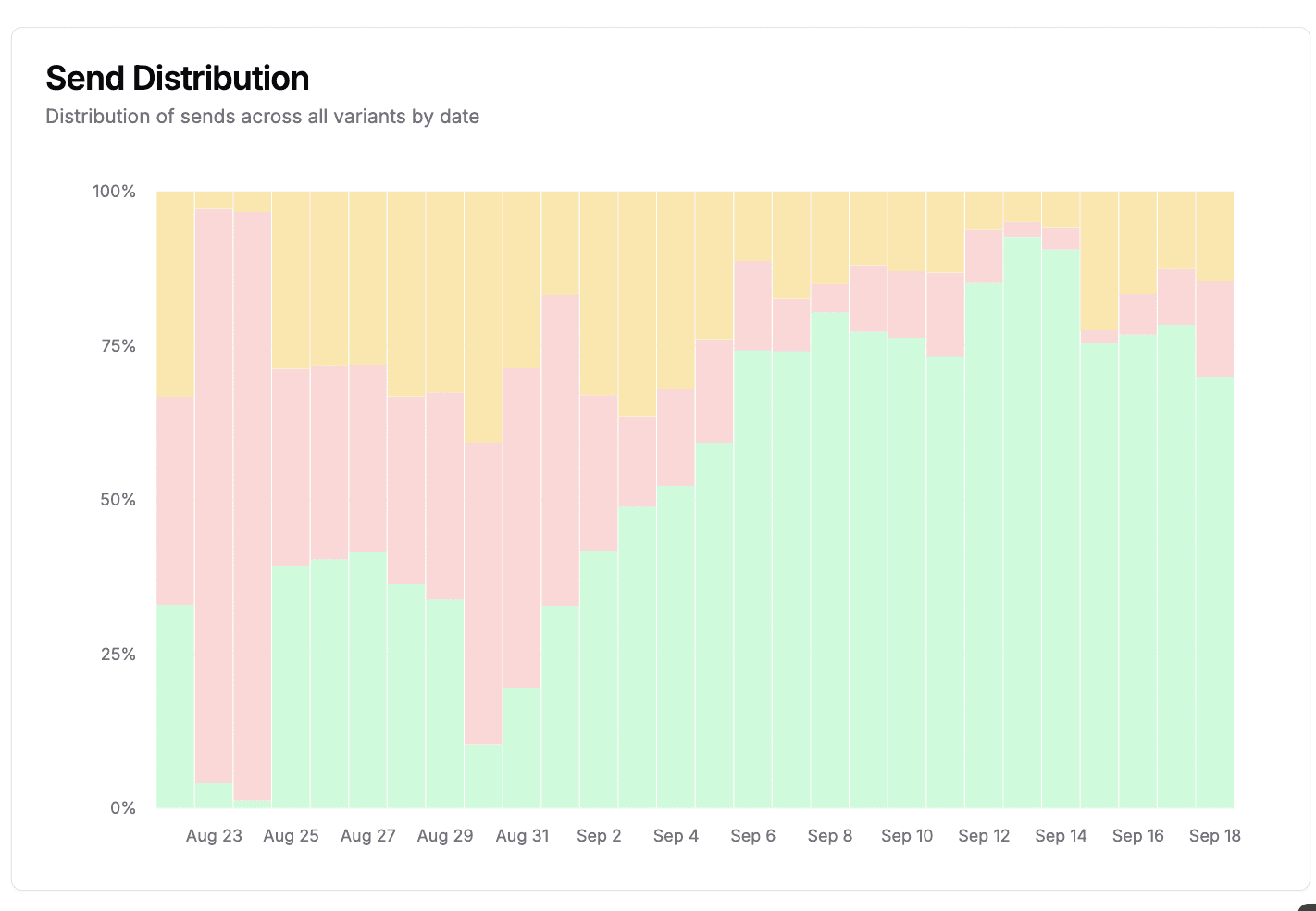
- Let the AI agents allocate harder and archive faster, reducing regret and freeing traffic for likely winners.
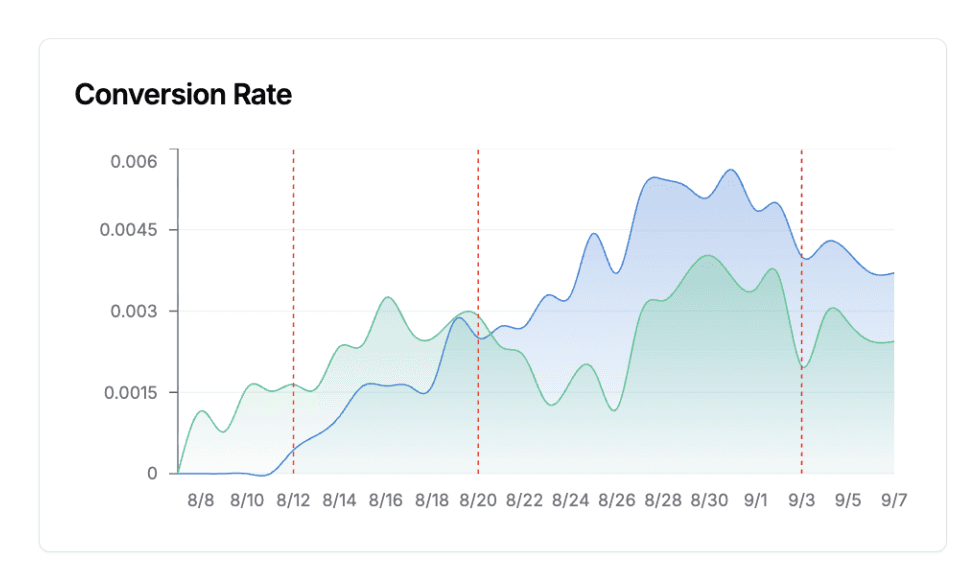
- Switched optimization from OR/CTR to conversion, accepting a longer stabilization window.
The turn: clarity and time-to-value win
A clear thesis emerged: friendly + speed converts; cheap + easy doesn’t.
- “Friendly reminder: get renters insurance” (human/social tone) sometimes pulled lower opens but delivered higher conversion—trust over tease.
- “…in seconds” (time-to-value) occasionally traded a bit of OR for meaningful conversion lift.
- Price-led lines and generic convenience claims lost steam at the decision step.
- As the bandit learned, allocation collapsed behind the top 1–2 variants, and fatigue-resistant replacements were predicted automatically.
What actually worked
- Optimize to the outcome you’re paid for. Use engagement to explore; let conversion decide allocation.
- Shrink regret aggressively. Auto-archive non-performers; keep a small control; don’t spread traffic across “interesting” maybes.
- Lead with trust + time-to-value. Human tone (“friendly reminder…”) plus concrete speed (“in seconds”) beat price-first every time.
Results (directional, portfolio-level)
- Multi-campaign CTOR lifts, with conversion gains concentrated in the friendly + speed thesis.
- Signature streams saw allocation consolidate behind those winning frames while unsubs stayed in check.
- Operating model shifted from manual overrides to always-on bandit learning: faster predict → approve → ship cycles and lower regret.
What’s next
- Expand into deeper personalization across segments & smarter orchestration.
- Keep conversions as the north star; treat engagement as an accelerator, not the finish line.
- Adapt to the always-on world with AI, while continuing to lay out guardrails and brand guidelines.
The human part
This worked because the Lemonade team stayed disciplined when the data was ambiguous- choosing to learn, prune, and persist instead of chasing pretty metrics. Kudos to Patrick Barther’s CRM leadership and AI-forward thinking. The takeaway for insurance: AI isn’t just a feature; it’s an operating system for marketing decisions, and Lemonade shows the category can truly move at AI speed.